
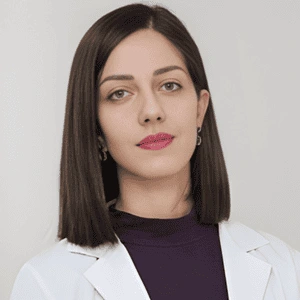
Lusine Harutyunyan
Yeolyan Hematology and Oncology Center, ArmeniaPresentation Title:
Understanding the causes of high mortality among adult acute leukaemia patients in Armenia
Abstract
Despite advances in the therapy of acute lymphoblastic leukaemia (ALL) and acute myeloid leukaemia (AML) in developed countries, treatment outcomes in developing countries are worse. We aim to understand how the limitations in diagnostic and treatment modalities in Armenia impact the clinical outcomes of AL patients.
We interrogated data from 431 adult patients with AL, which are all cases in Armenia during 01.01.2016-31.12.2020, of which 310 (72%) died. Male patients: 131 (54%). Median age: 59 years (IQR = 50, 18–85 years). A morphological complete remission (CR) before death was reached in 82 (34%) patients, including 24 dying without relapse. 50 subjects (20%) died during induction chemotherapy; 9 with ALL, 37 with AML and 1 with mixed-lineage leukaemia. Causes of death included no response to treatment (N = 29) or therapy-related complications including septic shock (N = 5), acute heart failure (N = 5), brain hemorrhage (N = 2) and acute respiratory failure (N = 1). Causes of death were unclear in eight patients.
Thirty subjects failed induction therapy and declined further treatment before starting the induction. In 24 subjects’ remission, state and death causes were unclear. Before starting chemotherapy 58 subjects died, 26 of whom refused therapy and 24 had leukaemia progression. A 5-year survival was 22% including 26% for ALL and 21% for AML.
The results of AL therapy in Armenia are worse than those reported in developed countries, where overall survival is about 60%. The major reasons are leukaemia progression and treatment-related complications.
Biography
Lusine Harutyunyan is a clinical hematologist focused on hematologic malignancies. The medical education was gained 2010-2020 with an excellence in her field. Right after completing the residency, she started working with patients as an attending physician at Yeolyan Hematology and Oncology Center. From 2019 she had active publications. From 2023 was invited to join the Scientific Division at Yeolyan Hematology and Oncology Center. Same year she was granted as a research fellow to join the Immune Oncology Research Institute. Deepening the research focus in her career, she joined the ongoing clinical trials and registries. Her publications are reaching 28 in different peer-reviewed journals. She was invited as a speaker in multiple local and international conferences. In late 2025 she contributed as a reviewer. She is an active member of EHA, ESMO, EORTC and other important professional associations.

Organization Location
1309 Coffeen Avenue, STE 1200, Sheridan, Wyoming 82801, USA
Mail us at
Drop us an email for Program enquiry
breastcancer@scientexconferences.com
General Queries
contact@scientexconferences.com
Registration Enquiry
finance@scientexconferences.com
breastcancer@scientexevents.org
Our Social Presence
Call us at
Whatsapp : (+1) 914 520 5013